Carvajal: The Backbone of Madrid's Title Push
Carvajal: The Backbone of Madrid's Title Push
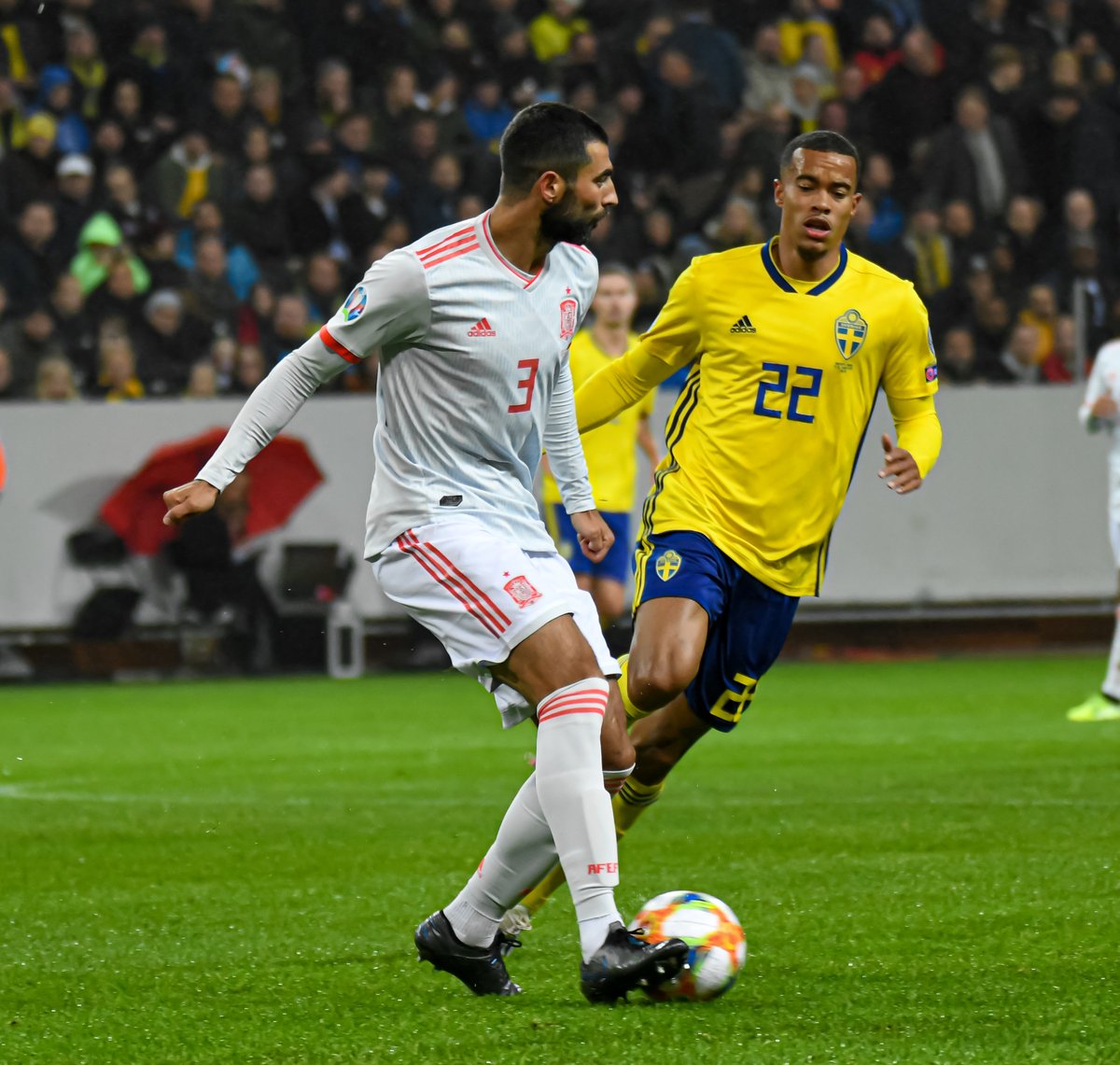
If Madrid wins La Liga this season, the post-match celebrations will belong to whoever scores the decisive goal. But the foundation upon which that title was built will have been laid by a right-back who has spent the entire campaign doing his job so effectively that most people forgot he was doing it at all.
There exists a particular kind of player in football who becomes invisible through excellence—so dependable, so consistently commanding in his role that supporters and pundits alike can forget to sing his name. Dani Carvajal has spent the better part of a decade occupying that space at Real Madrid, the right-back whose defensive intelligence and positional mastery have anchored the club’s dominance across multiple continental campaigns. Yet as La Liga enters its decisive stretch this season, Carvajal’s influence on Madrid’s title credentials has moved beyond the merely competent into the genuinely essential.
The narrative around Real Madrid’s 2025–26 campaign has centered on attacking firepower—the usual suspects, the names that fill the back pages and trending feeds. But anyone who has watched Madrid navigate the treacherous waters of La Liga’s second half knows that this title push, perhaps more than any in recent memory, rests upon the foundation of a defense that cannot afford to crack. That foundation has Carvajal’s fingerprints all over it.
What makes Carvajal’s contribution so critical to Madrid’s ambitions is not merely his ability to defend—though his one-on-one positioning remains among the league’s finest—but rather his capacity to compress space and organize the defensive shape in real time. Against the pressing sophistication of Barcelona, the transitional chaos of Atlético Madrid, and the fluid attacking movements of the title contenders below, Carvajal has become the quarterback of Madrid’s backline. He reads the game three passes ahead, anticipates the movement of opposing wingers before they themselves know where they’re going, and communicates with the authority of someone who has earned the respect of every teammate on the pitch.
Consider the implications for Madrid’s title defense. In a league where the margin between first and third place can be measured in single-digit points, the difference between a right-back who makes one critical error every three matches and one who makes one every fifteen is the difference between winning a title and finishing second. Carvajal operates in that rarefied space where his mistakes are so infrequent that they barely register in the statistical noise. More importantly, he prevents the mistakes of others through his positioning and communication.
The Spanish defender’s role has also evolved to meet the modern demands of La Liga’s attacking evolution. He is no longer purely a defensive sentinel; Carvajal has become a crucial link in Madrid’s build-up play, a player capable of receiving the ball in tight spaces and initiating attacks with the kind of composure that allows Madrid’s midfield to maintain tempo. His ability to switch play from the right flank, to push forward into advanced positions without leaving his team catastrophically exposed, represents the kind of tactical sophistication that separates champions from contenders.
There is a cultural dimension to Carvajal’s significance that extends beyond tactics and statistics. He represents a particular Madrid tradition—the academy graduate who embodies the club’s values through his professionalism, his consistency, and his refusal to seek the spotlight. In an era when every player seems desperate to construct a personal brand, Carvajal remains content to do his job with such precision that opposing teams spend more time worrying about what he might do than celebrating what they’ve accomplished. That mentality, replicated across the squad, is what creates championship teams.
The competitive landscape of La Liga this season has made Carvajal’s steadiness even more valuable. Barcelona has shown renewed ambition. Atlético Madrid continues to operate with the defensive intensity that has always characterized their approach. Real Sociedad and Villarreal have proven capable of punishing any lapse in concentration. In this environment, a defender who simply does not have lapses becomes worth his weight in trophies. Every clean sheet that Carvajal helps secure is not just three points; it is a statement that Madrid’s defensive integrity remains uncompromised.
If Madrid wins La Liga this season, the post-match celebrations will belong to whoever scores the decisive goal. The tactical discussions will focus on midfield control and attacking movement. But the foundation upon which that title was built will have been laid by a right-back who has spent the entire campaign doing his job so effectively that most people forgot he was doing it at all. That is the mark of Carvajal’s importance—not that he is the most spectacular player on the pitch, but that Madrid cannot afford to lose him. In the mathematics of a title race, that distinction means everything.
El Hincha